Stilson Fight
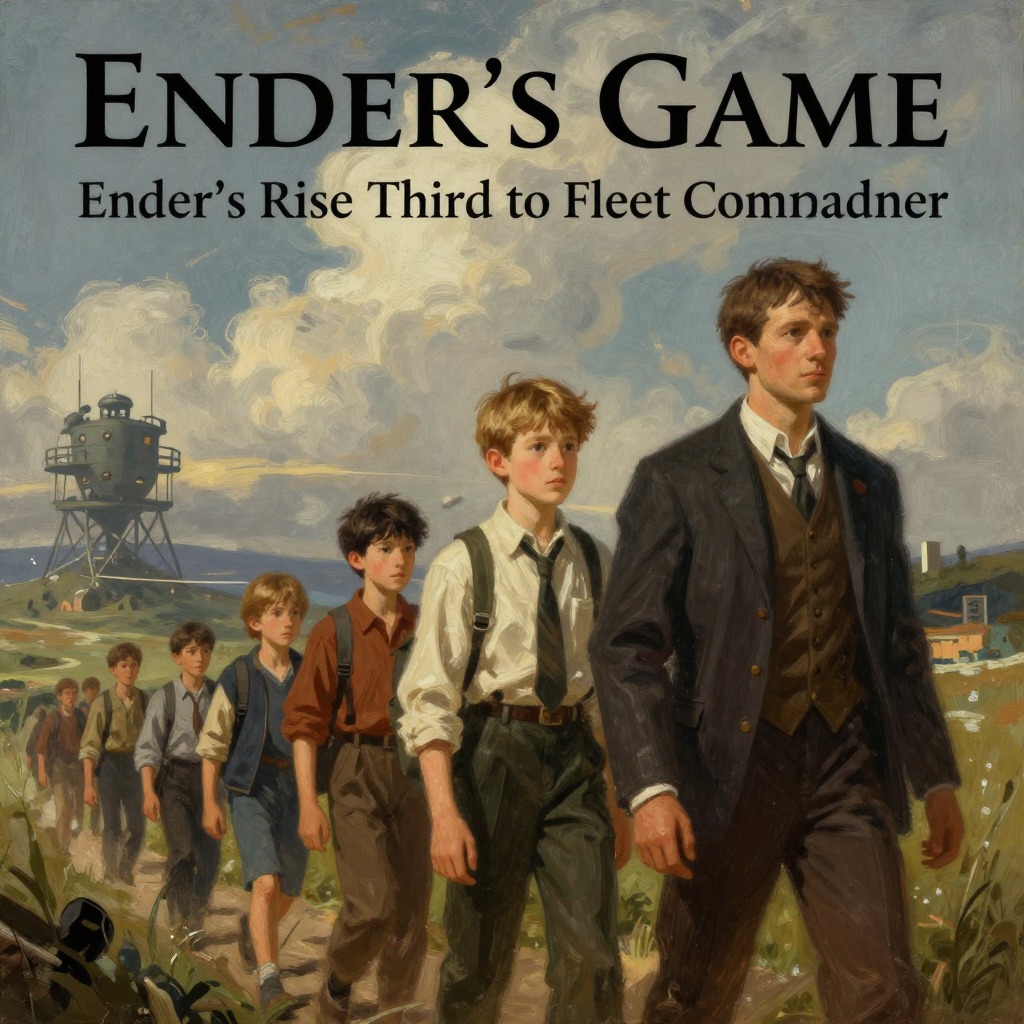
The Stilson Fight is the pivotal event that opens Ender's Game, occurring on the day Ender Wiggin's monitor is removed. It is the first demonstration of Ender's capacity for ruthless, preemptive violence, as he brutally beats the older boy Stilson and his gang to ensure they will never threaten him again. This fight is not merely an act of self-defense; it is a calculated act of total domination that reveals Ender's deepest fear—that he is just like his sadistic brother Peter—and it is the very test that convinces Colonel Graff that Ender is the one to save humanity.
The Setting and the Provocation
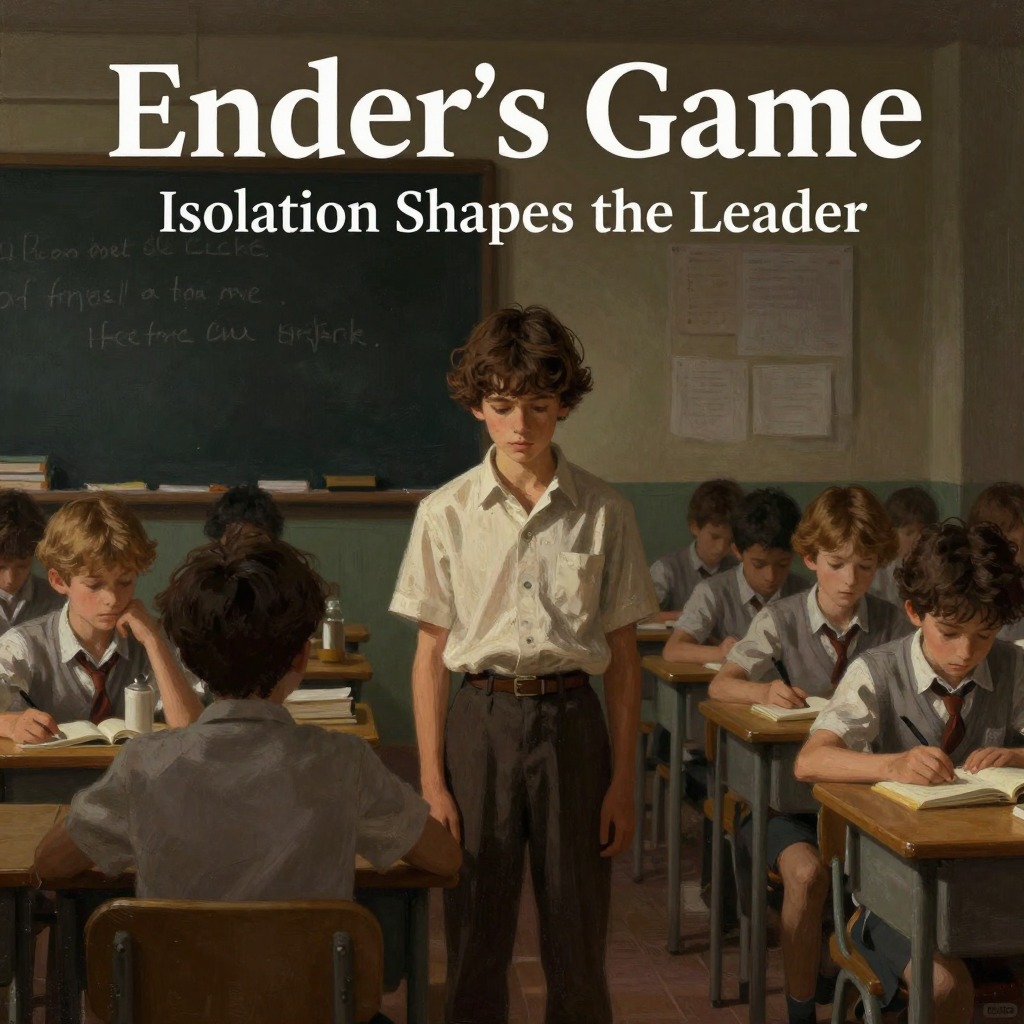
The fight takes place on the very day the monitor is removed from the back of Ender's neck. The monitor, which had been his constant companion and protector, is gone, and Ender is acutely aware of the vulnerability this creates. He knows that without the monitor, the other children can say and do whatever they like to him, with no one to witness or come to his rescue. This fear is realized when Stilson, a boy bigger than Ender, confronts him with a gang of his friends. Stilson taunts Ender, calling him "Third" and "turd," and mocking the bandaid on his neck, saying, "you lost your little birdie, Thirdie." The gang surrounds Ender, and Stilson begins pushing him, with others behind him pushing him back, creating a cruel see-saw game. Ender understands the unspoken rules of this kind of warfare: "This would not have a happy ending. So Ender decided that he'd rather not be the unhappiest at the end."
The Brutal Escalation
When Stilson's arm comes out to push him again, Ender grabs at it but misses. Stilson taunts him, "Oh, gonna fight me, huh? Gonna fight me, Thirdie?" The boys behind Ender grab him to hold him, but Ender, instead of showing fear, laughs and asks, "You mean it takes this many of you to fight one Third?" This momentarily confuses them, and they let go. In that instant, Ender kicks out high and hard, catching Stilson square in the breastbone. Stilson drops, and Ender is surprised by the effectiveness of his own blow. But Ender knows that winning this one fight is not enough. He thinks, "I have to win this now, and for all time, or I'll fight it every day and it will get worse and worse." He knows the unspoken rules of manly warfare: it is forbidden to strike an opponent who lies helpless on the ground. So, to forestall future vengeance, Ender walks to Stilson's supine body and kicks him again, viciously, in the ribs. He then kicks him in the crotch, and finally in the face, causing blood to spatter on the ground. He looks at the other boys coldly and warns them, "You might be having some idea of ganging up on me. You could probably beat me up pretty bad. But just remember what I do to people who try to hurt me. From then on you'd be wondering when I'd get you, and how bad it would be." He kicks Stilson in the face once more, saying, "It wouldn't be this bad. It would be worse."
The Aftermath and Ender's Self-Realization
After the fight, Ender turns and walks away, and nobody follows him. He hears the boys behind him saying, "Geez. Look at him. He's wasted." He leans his head against the wall of the corridor and cries until the bus comes. His tears are not from pain but from a horrifying self-recognition: "I am just like Peter. Take my monitor away, and I am just like Peter." This is the central trauma of Ender's life. He has used violence not just to defend himself but to utterly destroy his enemy, and in doing so, he sees the reflection of his brother, the boy he fears and hates most in the world. The fight is a profound moral crisis for Ender, one that will haunt him throughout his time at Battle School and beyond. He will later dream of Stilson, seeing him as a small, ridiculous six-year-old, and in his nightmares, the roles are reversed, and he is the one being tortured.
The Fight as a Test
The Stilson Fight is not just a personal crisis for Ender; it is also a test orchestrated by the International Fleet. The fight is the final step in Ender's testing, designed to see what he would do when the monitor was removed. Colonel Graff, who has been watching through the monitor, sees the fight as a success. He tells his colleague, "You just saw him beat the guts out of the leader of a gang." The other officer notes that Ender was thorough, "He didn't just beat him, he beat him deep. Like Mazer Rackham at the—" This comparison to the legendary commander who saved humanity from the buggers is significant. The fight reveals to the military that Ender has the necessary killer instinct, the willingness to win at all costs, even if it means inflicting terrible harm. Graff's colleague worries that Ender is "too malleable," but Graff's plan is to surround him with enemies to bring out his potential. The fight is the proof that Ender can be the weapon they need. It is also the reason Ender is recruited, as Graff later tells Ender's parents that the final step in his testing was to see what would happen if the monitor came off, and Ender passed.
The Fight's Enduring Legacy
The Stilson Fight is a defining moment that shapes Ender's entire trajectory. It is the first of many violent acts Ender will commit, each one more devastating than the last. The fight establishes a pattern: Ender, when threatened, will not just win; he will annihilate. This pattern will repeat with Bernard on the shuttle, with Bonzo in the bathroom, and ultimately with the entire bugger race. The fight also plants the seed of Ender's deep self-loathing. He hates the part of himself that can be so brutal, and he fears that he is no better than Peter. This internal conflict is what makes Ender a tragic figure, a child forced to become a killer to save humanity. The fight is also the first time Ender learns that the adults in his life, the ones who are supposed to protect him, will not. He is left to fend for himself, and he does so with a ferocity that will define his life. The memory of Stilson, the feeling of his bones giving way, will never leave him, and it will be a key part of the trauma that nearly breaks him at Command School.